Rainbow Six Siege Esports 2026: Meta, Teams, and Chaos Explained
Rainbow Six Siege esports can be quite an odd thing, like it gives you the impression that you are watching a chess game… if the chess pieces happened to be equipped with breach charges, night-vision cameras, and, oh, a few of them spraying in panic through the walls.
The ongoing competitive season is following this pattern, providing us with a balanced blend of well-thought-out tactics, skillful play, and the sporadic incident of something falling apart in less than five seconds that no one even admits in post-match interviews.
At the heart of all is the continuously changing Rainbow Six Siege competitive scene. Teams from regions like EMEA, NA, APAC, and LATAM are participating in qualifiers, earning stage points, and playing high-pressure matches that, instead of being games, are highly organized verbal spats, only with guns.
You May Also Like: How to Organise an eSports Tournament: Onsite, Online PC & Video Gaming
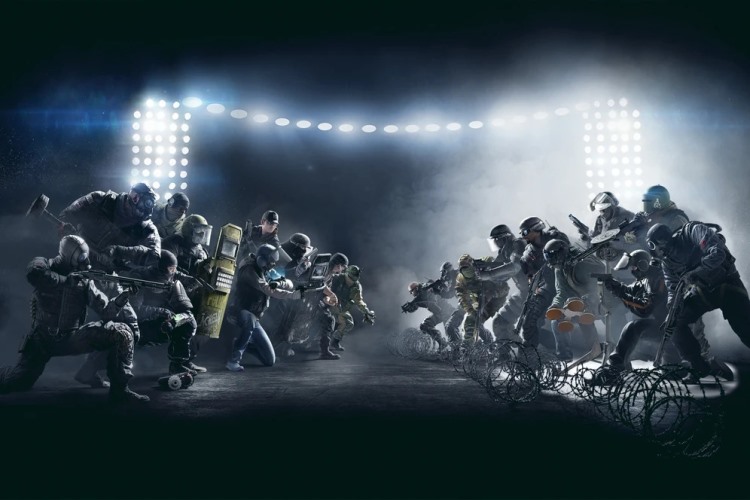
Image / Rainbow Six Siege wiki
The Meta: Still Breathing, Still Confusing
In fact, if there was an aspect that remained the same in Rainbow Six Siege esports, it would be the element of change itself rarely changing. The latest meta is still very much subject to tweaks in operator balances, the reshuffling of the map pool, and, of course, those 3 a.m. rank queue discoveries from pro players.
Attackers are still going all-in on intel gathering and going-for-the-kill (or, in Siege, “hard breach”) with their setups. Untouchable hard breachers like Ace, Thermite, and Hibana are still the go-to guys simply because, well, opening up reinforced walls is one of the things that makes a player groan in any game about breaking into strongholds and not just a breach in wasting time.
Defense, on the other hand, is mainly about utility denial and info-control. Whether it’s Jäger, Wamai, or Azami, setups can be the difference between a round ending after two minutes of play or twenty seconds of pure chaos.
What is laugh-out-loud funny is that the teams find out and use the changes way before the developers can finalize the patch notes and the new balance. One week, you have the feeling that the strategy is so good that people consider it cheating. The following week, it is so heavily countered that you might as well say it never existed. Professional gaming is arranged mayhem, basically.
Regional Rivalries Keep Things Loud
Each year, regional identity automatically progresses to its own main plot.
In EMEA, discipline and structured execution still permeate the whole gameplay. Teams often appear like they are reading from a very strict script… then suddenly someone misses a shot and the whole plot ignites!
North America is generally the one who indulge in explosive agressiveness. Entry fraggers are the first ones coming at you and they never even think twice.
LATAM has been, to a great extent, the emotional pulse of the whole scene. Even when on the papers their strategies seem a little bit crazed, the authentic confidence and the performing skills of the individuals make it work more than expected.
By the way, APAC is still very much the wildcard region. Innovative setups, choosing different and unexpected operator characters, and coming up with crazy map control ideas are some of the reasons why the matches always get turned around in the last moment.
The Rise of Structured Chaos
The most wonderful thing about watching Rainbow Six Siege esports at this moment is the interplay and equilibrium of structured and improvised elements. Teams prepare an execution, drone path, crossfire, and utility timing for weeks. But one well placed C4 or a perfectly timed flank can mess up everything.
The best teams not only have the best aim but are also capable of mentally resetting after a catastrophe in less than ten seconds. It is not even a practiceable skill. It is rather the ability to deal with emotional damage.
And of course sometimes, a single miscommunication is enough to make the opposing team turn a flawless setup into a highlight.
Players Who Define the Season in Rainbow Six Siege
Every new round of competition results in new players standing out who seem like they have a different level of processing the information.
You see support players who drone as if they have insider information about the enemy team. Entry fraggers who open rounds as if they are speedrunning the real world. And there are anchors who just sit on the bomb site and will not budge even if the whole building is on fire.
What differentiates top-level players isn’t only their mechanical skills, but also how well they make decisions during stressful situations. Given that physical evidence such as practice cues, the need to control one’s discomfort, the frustration level, and the desire for the same thing all play a role in a match alongside destruction mechanics, an individual’s awareness can almost be considered a superpower.
The Audience Factor
Rainbow Six Siege esports has developed in terms of how it can interact with the viewers. Besides better quality production, more analytical casting, much familiarization of the viewers with deep tactical concepts like roam clearing, default plant spots, and pixel angles that should not exist legally at all.
However, even after all the sophistication, the attractiveness stays at the basic. Watching the best-trained players struggle to outthink each other in the environments made to be destroyed.
It’s controlled destruction and professional demolition with rankings thrown in for good measure.
What is next in Rainbow Six Siege?
On the future competitive landscape, tactical depth and team identity refinement are the two directions the scene is moving towards. As the meta stabilizes and shifts through patches, expect even more emphasis on coordinated utility and map control rather than just raw aim duels.
Many eyeglasses are also focusing on the youth teams that are breaking into top level play. These teams tend to come up with very inventive strategies that might make the big established organizations have to quickly decide whether to adapt or lag behind.
Moreover, amidst all this tactical evolution, the fans also want clean executions that don’t end with a defender crouching in a corner that hasn’t been checked since 2019.
Last words about Rainbow Six Siege
The continuing success of Rainbow Six Siege esports lies in the fact that it does not let itself become predictable. Each match is a mixture of planning, improvisation, and occasional chaos which cannot be completely eliminated even by extensive scrimming.
It has a structure but it’s not always safe; it’s strategic but it’s not boring; and if you love logic too much, it can be quite tiring to watch.
For fans following the competitive scene closely, or even those casually exploring esports through platforms like GameZone online games, Siege remains one of the most mentally demanding and rewarding titles to watch. It doesn’t hand out clarity easily. You earn it round by round, or you don’t get it at all.
Trending articles: Football rules ✅ Soccer regulations & Laws of the Game by FIFA, FA, IFAB