
Is Tekken 8 EVO Losing Its Luster?
The question of EVO’s competitive relevance often pits the weight of its history and cultural significance against the lure of more lucrative events. For a long time, EVO has been the unquestioned pinnacle of the fighting game community’s calendar. Titles won there tend to be the ones fans talk about for years, far outlasting the memory of how much money was on the line. Tournaments of Tekken 8, after all, stand for victory with legacy as much as for victory itself.
Now, with the emergence of other events offering bigger prize pools in Tekken 8, the audience is also shifting. Some fans are starting to look at storylines from the pro scene through the lens of the regular season-type events where player consistency and ranking points mean more than nailing one big, single-elimination bracket.
A storyline that got people talking was the notion of the performance spread among top pros. Take for instance the case the Korean legend Jae-min ‘Knee’ Bae, who after done a spectacular job dominating the competition for years, started missing out on top 4 spots in high-level brackets. This sparked discussion about whether it was meta volatility Bae was struggling with, rather than his own player quality going down. It also wasn’t necessarily a case of the talent pool getting thinner. What it pointed to was how the modern fighting game metas can be such a leveler, that a wider number of players can all be very competitive, and therefore less of a sure thing to make the Top 8.
You May Also Like: How to Organise an eSports Tournament: Onsite, Online PC & Video Gaming

Contenidos
The History and Cultural Weight of EVO
What started out as a small gathering of the fighting game community in 1996, has since grown into the most well-known open fighting game championship in the world. What really defines EVO is its open nature. Any player can come along, pay their entry fee, and enter the bracket. That means that not only can you as a Sunday player go and have a go at the big boys, but you can also be the one to take down the champion.
One of the most iconic moments ever captured on video is also heavily associated with EVO, and is considered by many as one of the greatest moments in the history of competitive video gaming. The moment everyone calls “EVO Moment 37” is a legendary defensive comeback sequence from the Street Fighter II days of competitive fighting games, which unfolded in the grand final of EVO’s precursor tournament.
EVO’s production got bigger and bigger as it grew in popularity and the community scene was joined by one of gaming’s biggest household names, Sony Interactive Entertainment. The partnership helped take the event from a community tournament to one that could be enjoyed by fans all around the world via live broadcast.
Prestige vs. Circuit Structure
EVO’s prestige can be attributed to three things:
- Long history – It’s among the oldest major fighting game tournaments still held today.
- Open competition format – Means no one can predict the bracket, and there will be community drama.
- Cultural recognition – Shows that winning EVO is like winning “the world stage” of the fighting games circuit.
Apart from this, newcircuit-styleevents like the Esports World Cup and the official Tekken World Tour Finals provide higher prize money and a more systematic ranking structure.
The aforementioned contrast results in a dual perception:
- Players whose major concern is the legacy and community recognition, prefer going for EVO.
- Players that are basically interested in travel costs and earnings, may like the circuit tournaments the most.
How Prize Money Shapes Prestige and Competition in Tekken 8
Besides prize pools determining the tournament’s gravity in two major aspects. For one thing, larger prizes make the events more attractive to top players. As the financial stakes go higher, more top players justify their travel abroad, training investments and time spent preparing.
Moreover, prize handouts can lead to a higher level of competition as well. When the prizes at the championships are worthy players more frequently take strategic risks. That’s where some newer fests are sometimes capable of giving a hard time to the more established ones.
For instance, the Esports World Cup boasted a prize pot that was enormous by the standard of the usual FGC events. Lim “Ulsan” Soo-hoon‘s championship victory is said to have netted him about $300, 000 USD, a sum greatly in excess of typical EVO winnings.
Going from a gamer’s point of view, picking up a tournament spot can be risky business. A tournament abroad means spending on flights, food and lodging plus training downtime, and the entry fee. If a player misses the prize zone, then he or she does not get any money back from the trip.
Unlike some platform ecosystems, there is no mechanism similar to a hypothetical rebate model such as rewards programs where players recover part of their expenses through participation incentives through the GameZone rebate system.
For a pro player, it means that his or her choice of a tournament is often the result of a trade-off between these three elements:
- the prestige attached to the signing of the title
- the amount of prize money
- the chances of making the payout positions
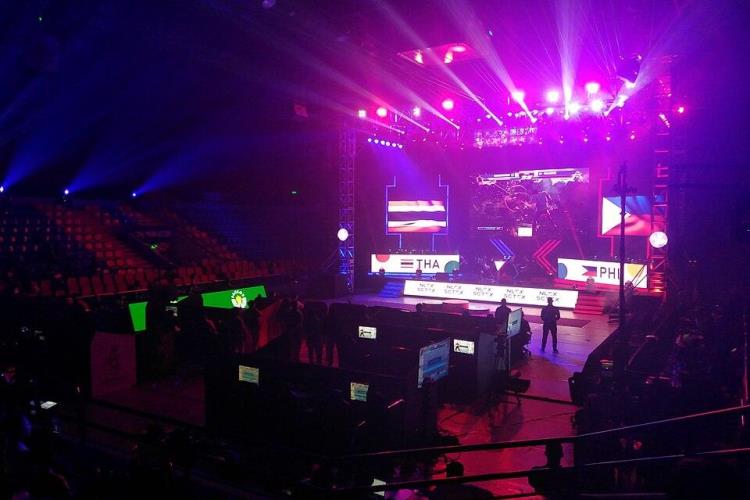
Is Tekken 8 Changing EVO’s Competitive Weight?
It is not that simple to answer yes or no. Because of Tekken 8‘s aggressive balance updates and the skill-demanding high-execution environment, the tournament outcomes can be more different than in the previous games. This can lead to bracket unpredictability to some extent, which can be both good and bad for prestige narratives.
In fighting game culture, prestige is very much a matter of historical continuity. If EVO is the longest-running open championship gathering for fighting games, its symbolic value will keep on being strong even if other events surpass it financially and in terms of prize money.
What the Long-Term Future Holds for Fighting Game Prestige
The discussion about prestige surrounding major tournaments of Tekken 8 will probably keep being fluid and not stabilizing into a single hierarchy. Open championship formats, the kind that legacy fighting events popularized, engender a strong emotional connection because any registered participant has at least a theoretical chance of becoming the champion.
On the other hand, circuit-style championships focus on displaying a high level of consistency throughout seasons. This model is somewhat akin to endurance competition structures found in other segments of esports.
Fighting games esports is quite a unique field as it involves the balancing of individual skill expression and community tradition. In contrast to team esports, where the organizational brand is the most prominent, fighting games often emphasize the players’ personal skills and mastery.
Travel risk will remain a decisive factor in the choice of players’ participation. Players coming from foreign countries need to weigh the benefits of gaining prestige against the travel and other costs. Thus, professional players of Tekken 8 see the choice of tournaments as part of their overall strategic plan rather than purely a competitive decision.
The general trend in the industry is that legacy tournaments and high-prize festival circuits will thrive in parallel. Legacy events are the custodians of historical identity, whereas newer formats are the forerunners of economic sustainability.
So the question is not really about EVO running out of its charm. There are even signs that “charm” is getting a broader meaning now. Championship history is no longer the only factor that determines prestige. It is now strongly influenced by factors such as the size of the audience, the economic side of the players’ careers, the players’ narratives, and the ever-changing competitive gaming ecosystems.
You May Also Like: How to organise a Football tournament  Proposal, Budget, Sponsorship